(WASHINGTON) — US administration officials acknowledged in closed-door briefings with congressional staff on Sunday that there was no specific intelligence indicating Iran was preparing to launch an immediate attack on US forces, according to two sources familiar with the discussions.
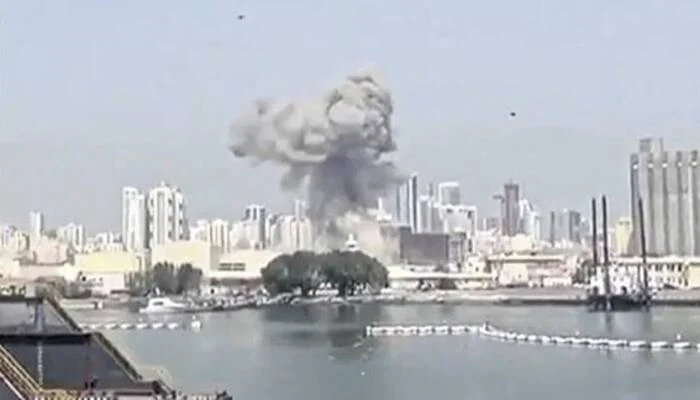
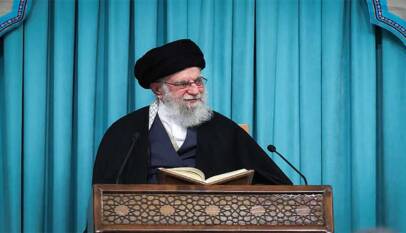
The disclosure comes after the United States and Israel carried out their largest coordinated military assault on Iran in decades. The strikes reportedly killed Iran’s Supreme Leader, Ayatollah Ali Khamenei, destroyed Iranian naval assets, and targeted more than 1,000 military and strategic sites across the country.
However, the private briefing to Congress appeared to contradict one of the key public justifications presented by senior administration officials. A day earlier, officials had told reporters that President Donald Trump authorized the strikes partly due to signs that Iran might carry out preemptive attacks against US forces stationed in the Middle East.
According to one official, Trump was unwilling to “sit back and allow American forces in the region to absorb attacks.”
Pentagon Briefings
Pentagon officials briefed both Democratic and Republican staff members from key national security committees in the Senate and House of Representatives for more than 90 minutes, according to the White House.
During those sessions, administration officials stressed that Iran’s ballistic missile capabilities and regional proxy forces posed what they described as an imminent threat to American interests. However, the sources said there was no concrete intelligence showing Tehran was planning to strike US forces first.
Trump has stated that the military campaign — expected to continue for several weeks — is designed to prevent Iran from developing a nuclear weapon, curb its missile programme, and eliminate threats to the United States and its allies. He has also publicly encouraged the Iranian population to rise up against the government.
Democrats Call It a “War of Choice”
Democratic lawmakers criticised the operation, calling it a “war of choice” and challenging the administration’s decision to abandon diplomatic efforts. Oman, which had been acting as a mediator, had indicated that negotiations still showed promise.
Trump has claimed — without publicly presenting supporting evidence — that Iran was close to developing the capability to strike the United States with ballistic missiles. Sources familiar with US intelligence assessments told Reuters that this claim was not supported by existing intelligence reports and appeared exaggerated.
As debate over the justification continues, the US military confirmed its first casualties of the conflict on Sunday.
Regime Change Scepticism
Despite the killing of Khamenei, several senior US officials reportedly remain doubtful that the military campaign will result in regime change in the near term.
Before and after the strikes began, Trump suggested that dismantling Iran’s ruling system was among Washington’s broader objectives. In a video posted on Truth Social, he called on “Iranian patriots who yearn for freedom” to seize the opportunity to reclaim their country.
However, US intelligence officials have expressed scepticism about whether Iran’s opposition movement, weakened by years of repression, could successfully topple the Islamic Republic’s system, which has been in place since 1979.
Earlier intelligence assessments from the Central Intelligence Agency reportedly concluded that if Khamenei were killed, he would likely be replaced by hard-line figures from the Islamic Revolutionary Guard Corps (IRGC) or similarly conservative clerics.
One US official familiar with White House deliberations said IRGC leadership is unlikely to surrender voluntarily, given its extensive patronage networks that help maintain internal loyalty.
Previous intelligence also noted that during the large anti-government protests in January, there were no known defections from the IRGC — a development analysts say would be essential for any successful revolution.
Political Uncertainty in Tehran
Iranian President Masoud Pezeshkian announced that a temporary leadership council — consisting of himself, the judiciary chief, and a representative from the Guardian Council — had assumed the duties of Supreme Leader.
Meanwhile, senior security official Ali Larijani accused the United States and Israel of attempting to destabilise and fragment Iran. State television reported that he warned separatist groups of severe consequences if they attempted to exploit the situation. Reuters was unable to independently verify those claims.
US intelligence agencies have also debated whether Khamenei’s death would significantly alter Iran’s stance in future nuclear negotiations or deter it from rebuilding missile and nuclear infrastructure.
Earlier this year, Trump’s special envoy Steve Witkoff reportedly held discussions with Iranian opposition figure Reza Pahlavi, the exiled son of Iran’s last shah. The talks raised questions about potential US support for alternative leadership should the current government collapse. However, officials say confidence has diminished in recent weeks regarding the opposition’s ability to govern effectively.
US Casualties and Public Opinion
US Central Command confirmed that three American troops were killed and five seriously wounded during the operations. Additional personnel sustained minor injuries, including shrapnel wounds and concussions.
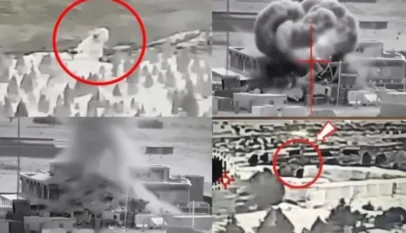
According to the military, US aircraft and naval forces have struck more than 1,000 targets since the launch of major combat operations. The strikes included B-2 stealth bombers dropping 2,000-pound bombs on hardened underground missile facilities.
A Reuters/Ipsos poll conducted Sunday found that 27% of Americans support the strikes, 43% oppose them, and 29% remain undecided.
The situation remains fluid, with ongoing debate in Washington over the strategic objectives and long-term consequences of the campaign.

Indian News channel hacked, pro-Pakistan content broadcast briefly
(Web Desk) — Indian television channel ABP News was temporarily disrupted after hack…
CSS Exam 2026: Age Limit Relaxed, Essay Paper Gets New Focus
The Senate Standing Committee on Delegated Legislation has asked the Federal Public Service Commission …